How Long Do Brake Pads Last in Everyday Driving?
Brake pads do not last forever, but they also do not wear out on the same schedule for every driver. Some people may get many years from one set. Others need new pads much sooner.
That can feel confusing. One person may say their brake pads lasted 60,000 miles, while someone else replaced theirs at 25,000 miles. Both stories can be true.
In everyday driving, brake pad life depends on how the car is driven, where it is used, and what type of pads are installed.
What Is the Average Brake Pad Lifespan?
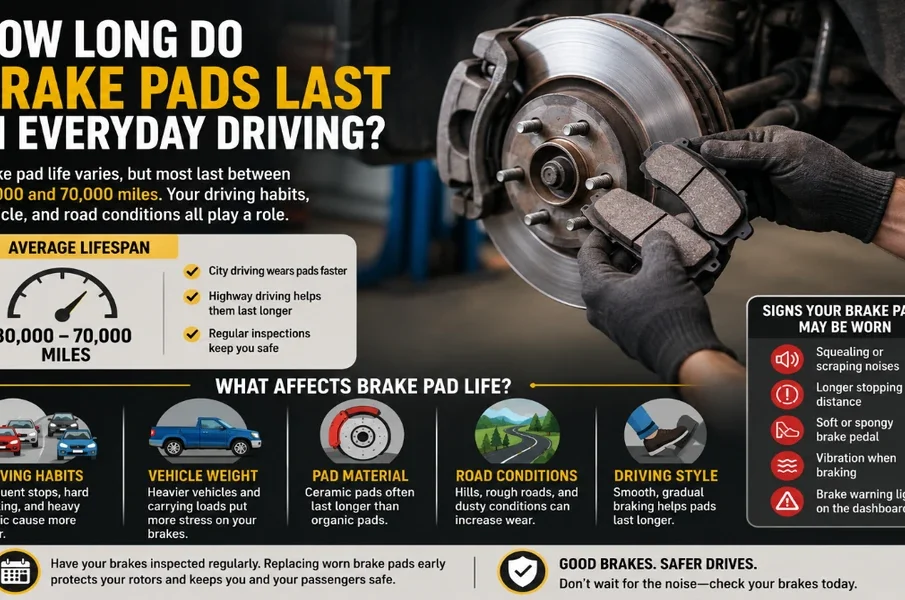
Many brake pads last between 30,000 and 70,000 miles. That is a broad range, and honestly, it has to be. Driving habits can change brake wear a lot.
A driver who spends most of the time on open highways may use the brakes less often. A driver in heavy city traffic may press the brake pedal hundreds of times during one trip.
Some pads can last longer than 70,000 miles. Others may wear out before 30,000 miles. The mileage number is only a guide, not a promise.
It is better to inspect the pads regularly instead of waiting for a certain number on the odometer.
City Driving Wears Pads Faster
Stop-and-go traffic can shorten brake pad life.
Every time the car slows down, the pads press against the brake rotors. This creates friction, which stops the vehicle. It also removes a small amount of material from the pads.
In a city, drivers often brake for traffic lights, crosswalks, turns, and slow vehicles. Even a short trip can involve many stops.
Highway driving is usually easier on brake pads because the vehicle may travel for long periods without slowing down.
Driving Habits Make a Difference
The way a person drives can have a large effect on brake wear.
Hard braking creates more heat and friction. Following other cars too closely may also cause a driver to brake often and suddenly.
Gentle braking is usually easier on the pads. Leaving more space between vehicles gives the driver time to slow down smoothly.
This does not mean drivers should avoid using the brakes when needed. Safety comes first. Still, looking ahead and slowing early may help the pads last longer.
Resting a foot on the brake pedal can also cause extra wear.
Vehicle Weight Matters
Heavier vehicles need more force to stop.
A large sport utility vehicle, truck, or van may wear brake pads faster than a small car, especially when carrying passengers, tools, or cargo.
Towing a trailer adds even more weight. Brakes work harder on hills and when slowing from higher speeds.
Brake systems are designed for the vehicle. But weight is still part of the wear process.
Brake Pad Material Affects Lifespan
Brake pads are made from different materials.
Organic pads are often quiet and smooth, but they may wear faster. Semi-metallic pads handle heat well and may last longer, though they can create more noise and brake dust.
Ceramic pads are usually quiet, clean, and durable. They often cost more.
There is no perfect pad for every vehicle. The best choice depends on the car, driving style, budget, and manufacturer recommendations.
Cheap pads may save money, but they may not last as long. Then again, a more expensive pad is not automatically the right one.
Signs Brake Pads May Be Worn
Brake pads often give warning signs before they are completely worn out.
You may notice:
- Squealing or scraping noises
- A longer stopping distance
- A soft or unusual brake pedal
- Vibration while braking
- A brake warning light
- The vehicle pulling to one side
Some pads have a small metal indicator that makes a squealing sound when the material becomes thin.
A grinding sound is more serious. It may mean the pad material is gone and metal parts are rubbing together. Driving this way can damage the rotors and increase repair costs.
How Often Should Brakes Be Checked?
Brakes should be inspected during routine service or whenever something feels different.
Many drivers have the brake system checked during tire rotations or oil changes. This gives a technician a chance to measure pad thickness and look at the rotors, calipers, and brake fluid.
Do not wait for noise. Some pads wear quietly.
Everyday brake pad life can vary widely, but regular inspections make the timing less of a mystery. Smooth driving, proper parts, and early attention to warning signs can help the pads last longer.
Brake pads are small compared with the rest of the vehicle. Still, they do an important job. Replacing them before they are fully worn protects the rotors, keeps stopping performance steady, and helps the car stay safer on the road.
This post was written by a professional at Tires2Go Florida. Tires2Go Florida is a trusted automotive service center located in Pinellas Park, Florida, serving drivers across St. Petersburg, Tampa, Clearwater, and Largo. Our certified mechanics handle tire and wheel replacement, brake service, suspension repairs, oil changes, wheel alignments, tire balancing, and road force balancing. We also specialize in ADAS calibration, suspension modifications, lift kits, and lowering kits using quality parts and modern diagnostic equipment. From routine maintenance to advanced automotive services, Tires2Go Florida provides dependable solutions and buy tires online for vehicles throughout the Tampa Bay area.