
What Happens If You Delay an Oil Change Too Long?
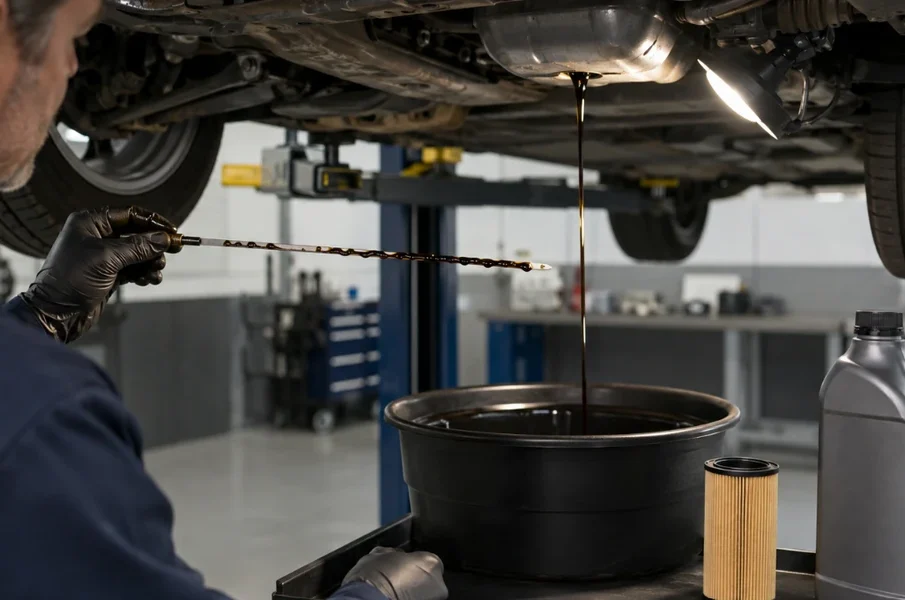
Engine oil protects moving parts from friction, heat, and contamination. It flows through narrow passages, carries away small particles, and helps keep internal components clean.
Oil does not remain effective forever. Heat, moisture, fuel, soot, and normal engine wear slowly change its condition. When an oil change is delayed too long, the engine loses some of the protection it needs.
The damage might begin quietly. By the time warning signs appear, internal wear might already be present.
Engine Oil Starts to Break Down
Fresh oil contains additives that control deposits, reduce friction, limit corrosion, and help the oil perform across a range of temperatures.
As mileage and time increase, these additives become depleted. Repeated heating and cooling also affect the oil’s ability to flow and protect metal surfaces.
Old oil might become thicker, contaminated, or less stable at high temperatures. It then struggles to create a strong protective film between moving parts.
Dark oil alone does not always mean the oil has failed. Oil normally becomes darker as it collects contaminants. Service history, mileage, oil level, and engine condition provide better information than color by itself.
Dirt and Deposits Begin to Build Up
Engine oil holds small particles in suspension until the filter captures them or the oil is drained. When oil remains in service too long, it collects more material than it was designed to manage.
This contamination might form varnish, carbon deposits, or thick sludge. Sludge can settle inside the oil pan, valve cover, and narrow oil passages.
Restricted passages reduce lubrication to important components. Areas far from the oil pump, including parts near the top of the engine, might receive less oil than they need.
The Oil Filter Becomes Overloaded
The oil filter traps metal particles, dirt, and other contaminants. Like the oil, the filter has a limited service life.
When it becomes heavily restricted, a bypass valve might allow oil to flow around the filter so the engine does not lose lubrication completely. The engine then receives oil that has not passed through the filtering material.
If oil flow drops too far, pressure might fall. Low oil pressure is a serious condition that might damage the engine quickly.
Internal Engine Wear Increases
Oil forms a thin barrier between metal surfaces. When that barrier weakens, parts experience more direct contact.
Bearings, camshafts, pistons, cylinder walls, and timing components might begin wearing faster. The engine might produce ticking, tapping, or knocking sounds.
Engines with turbochargers face added risk. A turbocharger spins at extremely high speed and depends on a steady supply of clean oil. Restricted or degraded oil might damage its bearings and create expensive repairs.
Heat Becomes Harder to Control
Oil does more than reduce friction. It also carries heat away from internal engine parts.
Old or thickened oil might circulate poorly, allowing temperatures to rise in certain areas. More friction also produces additional heat.
The cooling system controls most engine temperature, but it cannot replace proper lubrication. Poor oil condition and cooling-system problems together create an even greater risk of overheating and internal damage.
Fuel Economy and Performance Might Decline
An engine working against extra friction needs more energy to operate. Drivers might notice rough operation, weaker response, or reduced fuel economy.
These changes are not always dramatic. They often develop slowly, making them easy to overlook.
Modern engines also use oil pressure to operate variable valve timing and other systems. Dirty oil or blocked passages might affect how these parts respond.
What Are the Warning Signs?
Possible signs of an overdue oil change include:
- Oil or low-pressure warning lights
- Loud ticking or knocking
- A burning oil smell
- Thick deposits under the oil cap
- Rough engine operation
- Reduced performance
- Low oil level
- Excessive exhaust smoke
A warning light does not always mean the oil is simply old. It might indicate a leak, low pressure, sensor problem, or internal failure. Continuing to drive without identifying the cause risks greater damage.
How Often Should Oil Be Changed?
The correct interval depends on the vehicle, oil type, engine design, and driving conditions. Short trips, heavy traffic, towing, extended idling, extreme temperatures, and dusty roads often place additional stress on engine oil.
Follow the maintenance schedule listed for the vehicle rather than relying on one universal mileage number. Check the oil level between services as well, since an engine might consume or leak oil before the next scheduled change.
Delaying an oil change briefly does not guarantee immediate engine failure. Repeatedly extending the interval, however, allows contamination, deposits, and wear to build over time. Routine oil changes remain one of the simplest ways to protect an engine from avoidable damage.
This post was written by a professional at Tires2Go Florida. Tires2Go Florida is a trusted automotive service center located in Pinellas Park, Florida, serving drivers across St. Petersburg, Tampa, Clearwater, and Largo. Our certified mechanics handle auto repair Pinellas Park FL, tire and wheel replacement, brake service, suspension repairs, oil changes, wheel alignments, tire balancing, and road force balancing. We also specialize in ADAS calibration, suspension modifications, lift kits, and lowering kits using quality parts and modern diagnostic equipment. From routine maintenance to advanced automotive services, Tires2Go Florida provides dependable solutions and tires for sale for vehicles throughout the Tampa Bay area.


